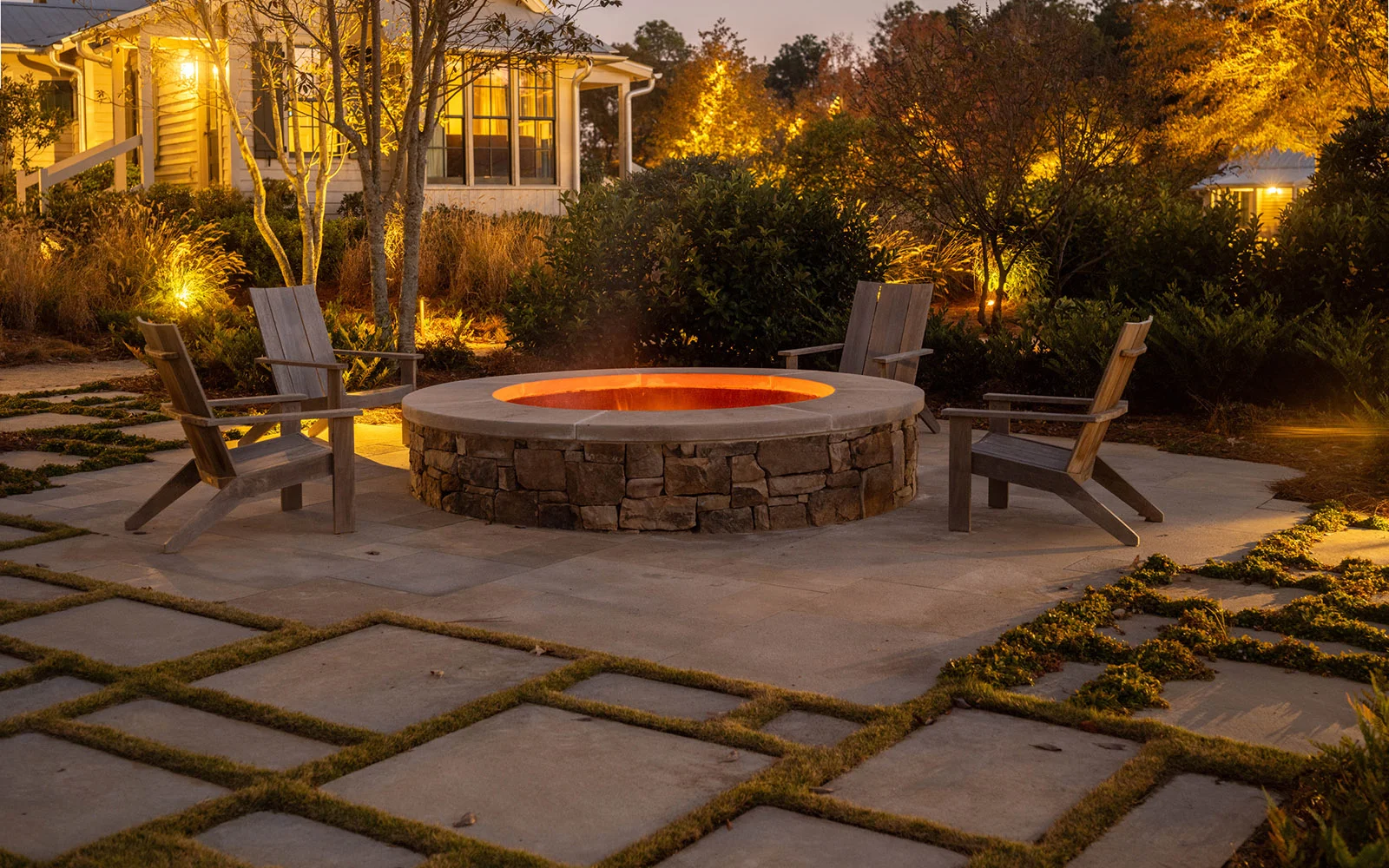
Landscape lighting should reveal, not flood
The best landscape lighting does more than make a property bright. It makes the right things visible after dark.
When every tree, wall, and planting bed receives the same amount of light, the landscape loses depth and the eye has nowhere to settle. A view that feels composed during the day can look flat and one-dimensional at night.
A more considered plan starts with what deserves attention from the places people use. Light on the trunk and branches of a mature tree can give a terrace a focal point. A fixture directed across a stone wall can bring out its texture. A restrained wash on part of the house can connect the architecture to the garden without illuminating every area equally.
Just as in a photograph or a film, darkness has a role to play as well. Space between illuminated features gives each one definition and allows the landscape to flow from one area into the next.
Light the way
Paths, steps, grade changes, and the edges of a pool deck need enough light for people to see where they are going. That does not mean every route needs a row of conspicuous fixtures.
A light integrated into a retaining wall can illuminate the steps beside it. A fixture set back in a planting bed can guide someone from the house to an outdoor kitchen while keeping the source of light out of view. The placement matters as much as the amount of light: glare directed toward a person’s eyes can make the surrounding area harder to see.
On a sloped Mountain Brook property, stairs and changes in elevation may shape the route through the backyard. On a larger property in Tuscaloosa or Northport, the distance between the house, terrace, and garden may be the more important consideration. In either case, the lighting plan should follow the way people move through and enjoy the property.
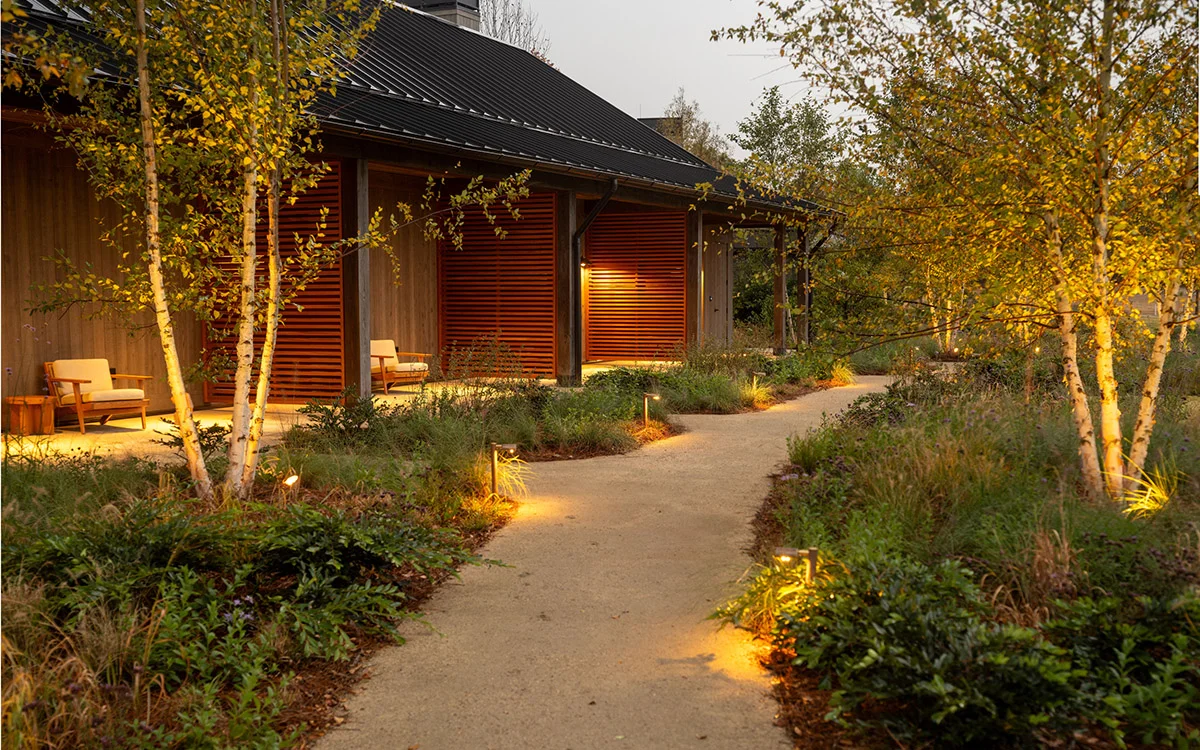
Give outdoor rooms the light they need
An outdoor kitchen, dining terrace, or fire feature is built to be used beyond the daylight hours. Each space asks something different of its lighting.
A cooking surface needs enough light to prepare a meal safely. A dining table benefits from a softer setting that lets people see one another without placing the whole terrace under a bright wash. Beyond the paving, a lit tree or wall can give the eye a place to travel and make the outdoor room feel connected to the rest of the property.
The color of the light matters too. Warm light often works well around residential landscapes, where it can complement stone, brick, and planting. Its brightness, direction, and placement should be considered together; even a warm light can produce glare if it is aimed poorly.
Plan lighting with the rest of the landscape
Lighting is easiest to coordinate when it is considered alongside the rest of the work. Conduit is planned before a patio is paved. Wires and fixtures can be integrated into steps or walls as they are built. Trees selected for a planting plan can be considered for the views they will create after dark as they mature.
Planning also gives the team a chance to account for any future terraces or an outdoor kitchen. Existing properties can be lit successfully too, though paving, established planting, and other site conditions will influence where wiring and fixtures can go and how light moves across the landscape.
Across the property, these decisions belong in the same conversation as hardscape, planting, and how the space will be used. When they are resolved together, the result is an outdoor space that remains just as usable after sunset and stays connected to the home throughout the evening.