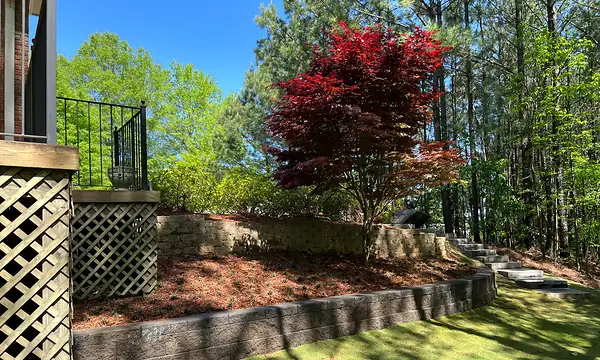
What low-maintenance actually means in Alabama's climate
In Alabama, low-maintenance is a specific set of conditions, not a marketing category. Summers are long, humid, and hard on plants that aren't suited to them. The gap between a wet spring and a dry August is significant. Clay soil holds water after rain events and bakes hard between them. A plant that performs reliably through those conditions, without constant irrigation, replacement, or corrective pruning, is genuinely low-maintenance. Most of what gets sold at garden centers is not.
Low-maintenance doesn't mean no maintenance. Every landscape requires seasonal cleanup, occasional editing, and attention as it matures. The difference is between maintenance that's predictable and manageable versus maintenance that's reactive and constant because the plants are fighting conditions they were never suited for. The second type looks expensive even when the plants themselves were inexpensive.
The goal for a refined Alabama property is a palette where plants do most of the work, structure holds across twelve months, and the maintenance calendar is light enough that it doesn't define the homeowner's relationship with the landscape.
“A palette built around three to five well-chosen species, planted generously, reads as more resolved than twenty different plants competing for attention.”
How Alabama clay soil affects plant selection and establishment
Clay soil is the starting condition across most of Alabama, and plant failure on Alabama properties is usually a soil and drainage mismatch, not a care failure. Clay drains slowly. After a heavy rain it stays saturated longer than lighter soils, and roots sitting in saturated clay develop rot and stress. Between rain events, clay compacts and becomes less permeable, especially in high-traffic areas.
The Alabama Cooperative Extension recommends organic matter amendment and raised planting for poorly drained clay areas. For plants that need well-drained conditions, bermed planting or raised bed construction is more reliable than trying to amend clay in place. One note on individual planting hole amendment: adding organic matter to the hole improves establishment, but it can also create a drainage transition that holds water against the root ball if the surrounding clay doesn't drain. Mixing amendment into a broader bed area produces better long-term results.
The more direct approach is selecting plants already adapted to heavy soils. Plants that evolved in Alabama's piedmont and coastal plain conditions have root systems and tolerances built for clay's wet and dry cycles. That tolerance is the foundation of a genuinely low-maintenance planting, and no amount of amendment substitutes for it.
Building a refined plant palette for Alabama properties
The most common mistake in low-maintenance planting is treating it as a collection of individual plant choices rather than a composition. Repetition, clear hierarchy between structural and accent plants, restraint with variety, and enough mass behind each selection that it reads as intentional, these principles matter regardless of which specific plants are in the palette. Start there, then fit plants to those roles.
Evergreen structure
Evergreen plants are what a planting falls back on in winter and what give a composition year-round legibility. Nellie Stevens holly is one of the most reliable structural choices in Alabama: vigorous, tolerant of clay, dense and pyramidal in form, and producing red berries through winter. Wax myrtle works where a looser evergreen screen is appropriate, tolerates wet feet, and has a fine texture that reads well against heavier architectural forms. Little Gem magnolia fills the mid-canopy layer with a tidier habit than its full-sized counterpart and carries white summer bloom and bronzed leaf undersides through multiple seasons. Cherry laurel provides fast structure where coverage is the priority.
Native and adapted shrubs
Oakleaf hydrangea is one of the strongest all-season performers native to Alabama. It handles shade and clay, produces dramatic white flower clusters in summer that dry to buff through fall, and offers good peeling bark interest in winter. Massed in a shaded bed it reads architectural. Virginia sweetspire is smaller and more refined, with white summer bloom spikes and reliable red-orange fall color. Native beautyberry, Callicarpa americana, works best as an accent: the purple berry clusters in late summer and fall are striking and it establishes easily in clay. Native possumhaw holly provides a more formal silhouette with persistent red berries and reliable performance in poorly drained sites.
Ornamental grasses
Muhly grass is the most visually effective plant in an Alabama palette at the right moment. The pink-purple inflorescence in September and October carries a planting bed for two full months, and the fine texture contrasts well with broader-leaved shrubs. Drought-tolerant once established, it needs nothing more than a hard cutback in late winter. Inland sea oats is the native choice for shadier areas where muhly won't perform. Switchgrass, particularly the cultivar Shenandoah, gives blue-green summer foliage and strong red fall color in a more upright form suited to formal borders.
Groundcovers for slopes and beds
Liriope is the default groundcover on Alabama slopes because it's nearly indestructible in clay, tolerates both sun and shade, and holds soil reliably. The concern is overuse: solid blocks of liriope on every slope reads as a maintenance choice rather than a design choice. Asian jasmine is a finer-textured alternative for shadier slopes, spreading more densely and presenting a less institutional appearance. For deep shade where little else will grow, native ginger, Hexastylis species, provides a low, dense, glossy groundcover that performs where almost nothing else will.
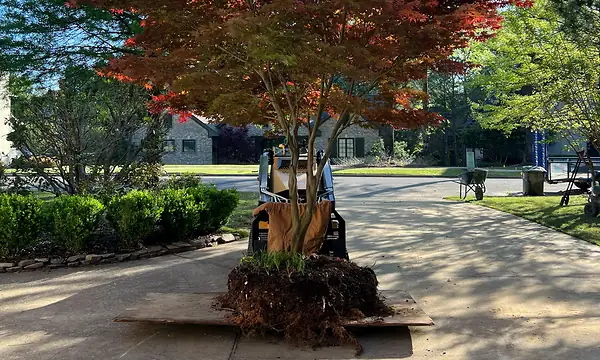
Landscape planting in Tuscaloosa, Northport, and Mountain Brook
The same plant performs differently depending on site conditions, sun exposure, soil drainage, and what the property needs the planting to do.
Tuscaloosa
Many residential properties in Tuscaloosa have significant sun exposure, moderate grades, and front yard conditions where year-round structure and curb appeal are the priorities. Nellie Stevens holly anchoring corners, muhly grass along bed edges, and Virginia sweetspire filling mid-border positions gives a front landscape that holds across the full seasonal cycle without demanding much. Summer heat in Tuscaloosa is punishing enough that establishing new plants with supplemental irrigation in their first season is worth doing even for drought-tolerant species.
Northport
Larger lots in Northport support a slightly more expansive palette, with more room for naturalistic planting at property edges and in rear yard transitions. Beautyberry at lot borders, masses of switchgrass in sunny transition areas, and possumhaw holly in low spots that stay wet give a rear landscape that reads as designed while tolerating the full range of conditions a larger lot presents. Slope stabilization is a frequent consideration: groundcovers and native grasses planted densely on grade transitions reduce erosion and the maintenance that comes with bare slopes.
Mountain Brook
Steep wooded lots in Mountain Brook call for a different approach. The priority is shade tolerance and root competition tolerance, since established tree roots take water and nutrients aggressively. Oakleaf hydrangea, native ferns including Cinnamon fern and Southern wood fern, cast iron plant in deep shade, and native ginger as a groundcover are the core tools. The planting should feel layered and regional rather than transplanted from a full-sun design. The most successful Mountain Brook landscapes work with the wooded character of the lot rather than against it.
When plants are not enough: drainage and slope problems first
Plant material cannot solve a drainage problem. Dense root systems provide meaningful soil stabilization on gentle slopes over time, but if water is pooling, if a slope is actively losing soil, or if the grade change is significant enough to destabilize the ground during a heavy rain, plants are working against conditions they can't correct on their own.
A bed planted into an area with active drainage problems will underperform regardless of species selection. Roots sitting in saturated clay fail. Mulch washing off a slope during every rain event takes establishment material with it. A planting that looks promising at installation looks thin and patchy by year two, and the diagnosis is usually the site conditions, not the plant selection.
Before any significant planting investment on a property with slope, standing water, or known clay soil issues, confirming that site conditions will support the plants is worth doing first. The articles on yard drainage and erosion in Alabama and retaining walls cover the structural side of that conversation in detail.
For properties in Tuscaloosa, Northport, Mountain Brook, or the surrounding area, a consultation with Edmonds Environmental starts with the site conditions before any plant species are discussed.