What every retaining wall is built to do
Strip away the material and finish, and a retaining wall has one job. It holds ground at an elevation it would not maintain on its own. A slope becomes a terrace. An eroding bank becomes a stable yard. A drop in grade becomes room for a patio, pool deck, driveway, or planting area.
That purpose does not change. The type of forces putting pressure on the wall do.
Soil type, drainage, water exposure, wall height, and the weight carried above the wall all shape the design. A lakefront wall on Lake Tuscaloosa and a hillside wall in Mountain Brook may look similar from a distance while solving very different structural problems below the surface.
“The wall's purpose stays the same. The conditions it has to withstand do not.”
How the site changes the retaining wall
Lake Tuscaloosa: shoreline walls and seawalls
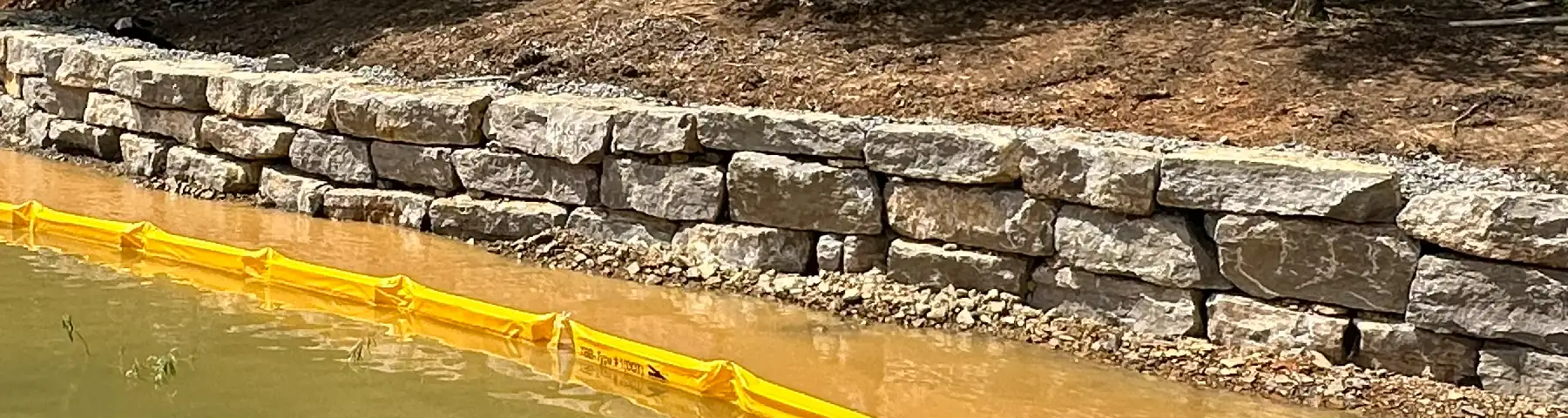
At the water's edge, the structure must retain the bank while resisting wave action, changing water levels, and continuously wet soil. Boat traffic pushes water against the shoreline. Saturated ground changes the pressure behind the wall. Erosion at the base can undermine a structure that appears sound above the waterline.
Depending on the bank, water depth, access, and desired finish, the solution may involve a seawall, stone revetment, riprap, or a coordinated system that stabilizes both the waterline and the grade above it. The first question is not which material looks best. It is what is causing the shoreline to move and what the structure must resist over time.
Mountain Brook and Birmingham-area hillsides
Mountain Brook, Vestavia Hills, Homewood, Hoover, and many Birmingham properties are more often dealing with elevation than open water. Steep lots, red clay, narrow access, mature trees, and homes positioned close to the slope make retaining walls part of the larger site plan.
A wall may create a pool terrace, level a garden room, support a driveway, or recover an unusable backyard. Because it often sits close to the home and remains visible year-round, finish matters. Natural stone, stone veneer, brick, or refined segmental block should read as part of the architecture rather than infrastructure added afterward.
Drainage and reinforcement remain structural decisions, but coordination carries equal weight. Wall height, steps, planting, lighting, paving, and adjoining elevations need to be resolved together.
Tuscaloosa and Northport grade changes
Tuscaloosa and Northport properties frequently need walls at a specific transition: a driveway cut, patio edge, rear property line, drainage corridor, or change in elevation between neighboring lots.
These walls are often shorter than the larger systems required on steep Birmingham-area properties, but shorter does not mean simpler or easier to construct. Alabama clay drains poorly and holds water behind the wall, and driveways, patios, fences, or another slope above it can add meaningful load. A functional wall needs the same discipline below grade as a more architectural one.
Materials should follow the site, not the trend
There is no single best retaining wall material for every Alabama property.
Shoreline work may call for a seawall, stone revetment, or riprap selected to stabilize the bank and absorb wave energy. Hillside and residential walls may use segmental retaining wall block, boulder systems, natural stone, or reinforced concrete masonry finished with stone or brick veneer.
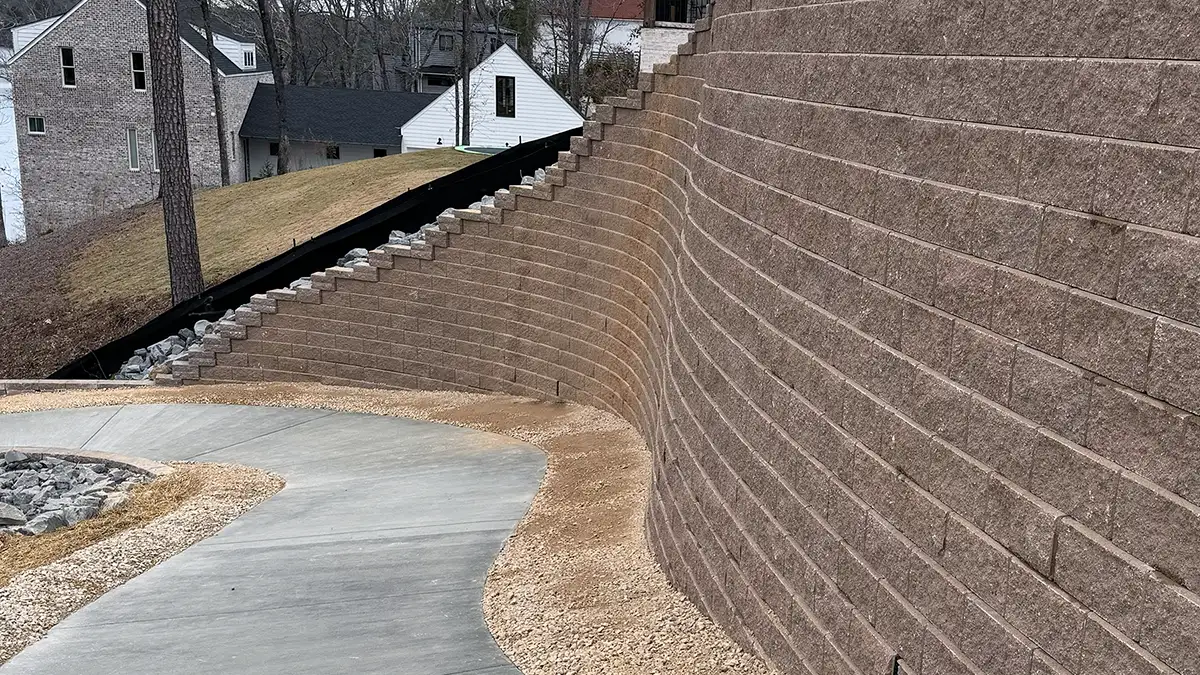
Segmental block is efficient and well suited to many residential grade changes. Natural stone and masonry offer a more permanent architectural character. Boulder walls suit properties with a looser, more natural composition. Reinforcement such as geogrid is added when wall height, soil conditions, and loading require it.
The face material is only the visible part of the system. Base preparation, drainage aggregate, reinforcement, drain pipe, outlets, and soil compaction determine how the wall performs. A refined finish cannot compensate for water trapped behind the structure.
Permitting depends on the wall and the property
Shoreline work on Lake Tuscaloosa is reviewed through the City of Tuscaloosa's Lakes Division. Work on Alabama Power-managed reservoirs follows Alabama Power's shoreline permitting process. Inland walls may require building, grading, zoning, or engineering review depending on the jurisdiction, wall height, location, and load above the wall.
The practical lesson is simple: confirm the permitting path before design is complete. A wall near a shoreline, structure, driveway, property line, easement, or regulated slope may require more review than its height alone suggests. Building that into the schedule is easier than discovering it after excavation begins.
What does not change from the lake to the hillside
Across every wall type, the fundamentals remain consistent.
The wall must sit on a base designed for the soil beneath it. Water behind it needs a reliable path out. The structure must be sized for the grade and load it carries. Materials should fit the architecture and broader landscape. And the finished wall should return something useful to the property, not simply hold dirt in place.
That is also the right way to compare proposals. Two quotes may use the same words: retaining wall, drainage, stone, block, while describing very different structures. The meaningful questions are what happens below grade, how water is managed, what reinforcement is included, who handles engineering and permits, and how the wall connects to the rest of the property.
A lower price created by removing drainage, reinforcement, or site-specific design is not a shorter route to the same result. It is a different, shorter-lived wall wearing the same name.
When to bring in a retaining wall contractor
Low decorative garden walls may be manageable for an experienced homeowner. A wall retaining meaningful grade, supporting a driveway or outdoor living area, sitting near a structure or property line, or protecting a shoreline deserves a site evaluation before materials are selected.
The same is true when an existing wall is leaning, cracking, separating, or staying wet at the face. Those symptoms usually point to drainage, base, soil, or loading conditions behind the visible material.
For properties in Tuscaloosa, Northport, Birmingham, Mountain Brook, Vestavia Hills, Homewood, Hoover, or on Lake Tuscaloosa, an Edmonds Environmental site visit starts with the soil, water movement, grade, and load. The material comes after the wall's real job is understood.