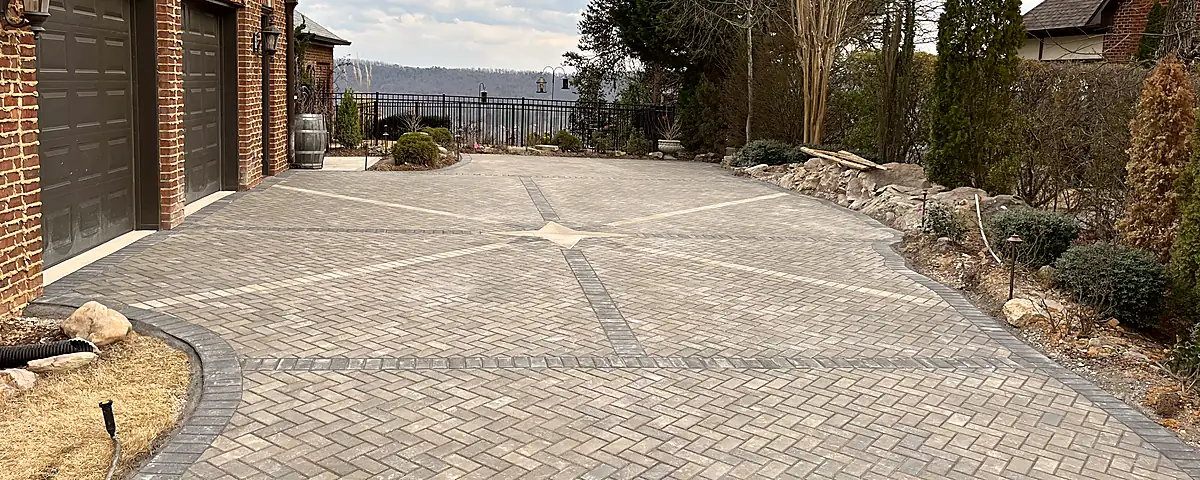
The finish starts underneath
Surface Performance
Paved surfaces only hold up when excavation, compaction, base prep, and edge restraint are handled with the same care as the visible finish.
Paver installation is about more than surface appearance. It is the combination of layout, base preparation, edge control, and material detailing that makes the finished hardscape hold up over time.
Paved surfaces fail at the base, not the top. A patio that shifts, a driveway that heaves, a walkway that holds water instead of moving it - these are base problems, not paver problems. The material on the surface is only as good as what's compacted underneath it.
Edmonds Environmental builds from the subgrade up. Excavation depth, compaction, drainage slope, and edge restraint are determined by the site and how the surface will be used. Pattern and material selection come after the structural work is understood. Edmonds Environmental’s Birmingham Belgard Holland Stone driveway received Best Driveway recognition at the 2026 Belgard Awards.
Paved surfaces only hold up when excavation, compaction, base prep, and edge restraint are handled with the same care as the visible finish.
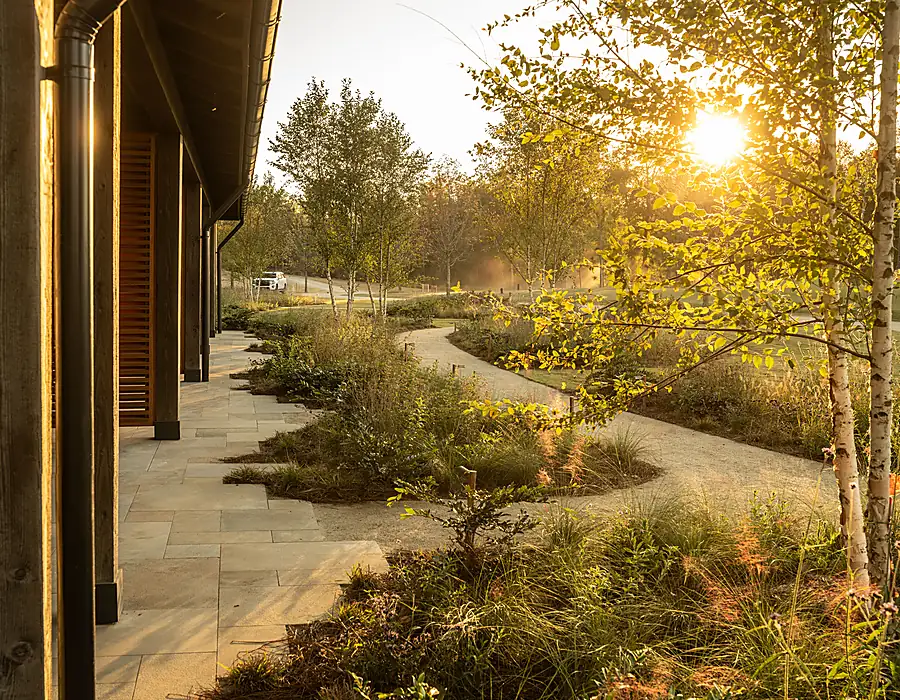
Paving should support how the space is used, how water moves, and how the finished surface connects to planting, walls, and architecture.
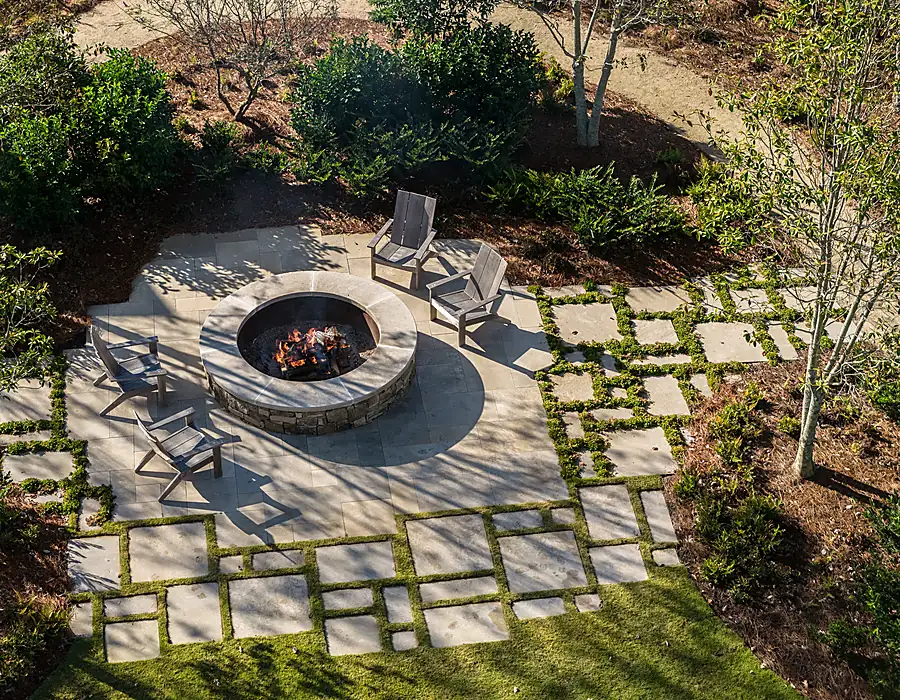
The strongest paving work is defined by clean transitions, controlled edges, and surfaces that feel intentional rather than simply installed.
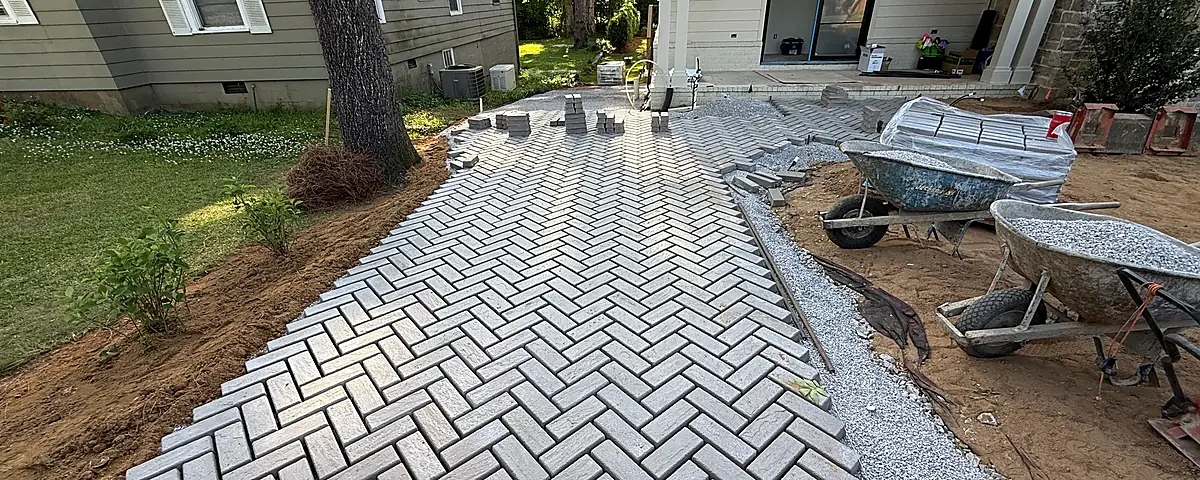
Driveways, walkways, patios, and pool surrounds work best when they are designed as part of the broader landscape composition instead of isolated paving scopes.
Excavation depth, compaction, bedding material, and drainage slope are set by the site before the first paver goes down.
Pattern direction, material selection, and layout are designed to support how the space is used and how it reads against the property.
Edge restraint, transitions, and joint stability are what keep a paved surface from shifting, spreading, or reading as unfinished over time.
See how paving layout, detailing, and finished edges come together when the surface is designed to support the full site composition.
Explore Paver Installation Portfolio Curved front-entry paver installation in HomewoodCompleted paver installations across Alabama, from residential patios and walkways to full driveway scopes, documented from base preparation through finished surface.
View All ProjectsA Birmingham Holland Stone driveway with diamond and compass inlays, recognized at the 2026 Belgard Awards.
Explore the Award-Winning DrivewayConcrete pavers and natural stone both perform well when installed correctly. The material question is inseparable from the application. A paver suited to a shaded garden path isn't the right choice for a south-facing driveway carrying vehicle load. Alabama's clay soil and rainfall patterns also affect base preparation, and the base matters more than the surface above it.
Shifting and sinking trace back to inadequate base depth, poor compaction, or drainage that wasn't addressed before installation. When water moves through clay soil beneath a paver field, it creates voids and the surface settles. Prevention starts with proper excavation, a compacted gravel base sized to the site's load and drainage conditions, and on clay-heavy sites, drainage management beneath the base before the first paver goes down.
Yes. Paver installation in Mountain Brook is part of the current portfolio. Properties there involve detailed site conditions, mature trees, existing hardscape, and finished homes where the quality of the work is visible from the street. That context is accounted for in how each project is planned.
If your property needs a patio, walk, driveway, or paved surface that feels refined and performs over time, Edmonds Environmental can build it from the base up with the right structure underneath.
Schedule a Consultation