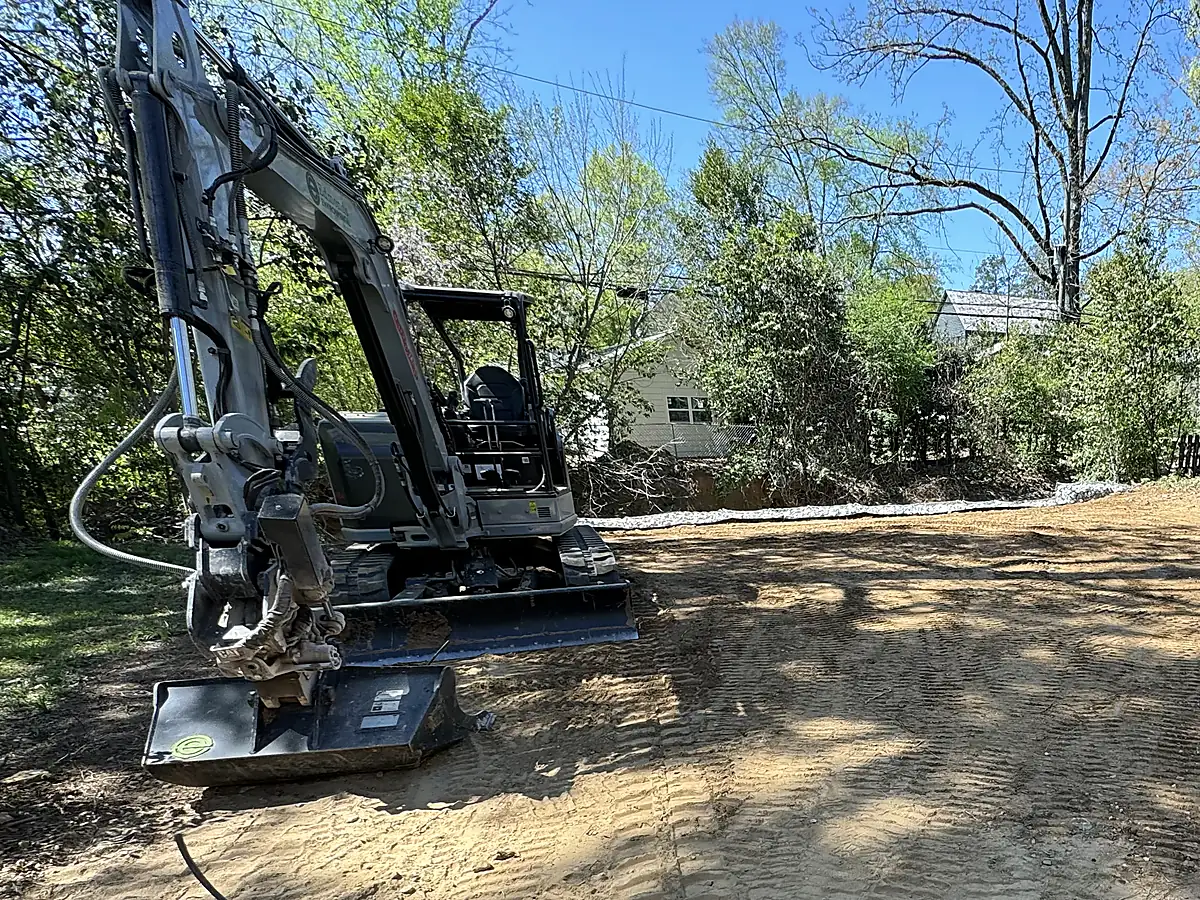
Grading and drainage shape every successful landscape
Grade determines more than whether a yard feels flat or steep. It influences where people can comfortably walk, where patios and lawns can exist, how planting beds meet hardscape and, most importantly, where water goes after a storm. Drainage on the other hand, determines what happens to that water when it gets there.
A well-designed grading plan can turn an awkward transition into a usable lawn, create enough level ground for an outdoor room or pool, and allow a retaining wall to become part of the architecture instead of simply a wall holding soil in place.
Water follows those decisions.
If a beautiful planting bed sits where runoff naturally collects, plant selection will not save it. If a new patio dams up the path water previously used to flow across a property, that water will find another path, over, under, around, or through. And if a lawn is graded toward the house rather than away from it, irrigation and planting become secondary concerns, behind insurance claims and repairs.
The best time and sometimes the only time to solve those problems is while the landscape still exists only on paper.
Alabama clay soil changes the way water moves
On many Alabama properties, clay makes this planning especially important. Clay can hold water after prolonged rain and become hard and compact during dry periods. These sites often experience both excessive moisture and difficult growing conditions within the same season.
The answer is not automatically a French drain, retaining wall or another type of drainage infrastructure. Sometimes a subtle grading correction is enough. Sometimes runoff needs to be intercepted and redirected. On a steep property, terracing may create both better water management and valuable usable ground.
That distinction matters in Tuscaloosa and Northport, where larger residential sites can move substantial amounts of stormwater across a property, and in Mountain Brook, where steep grades, mature trees and existing architecture often make seemingly small elevation changes consequential.
Good design begins by watching the site rather than prescribing a favorite solution. What a designer likes or doesn’t like, doesn’t factor into the equation of what’s right for the property in question.
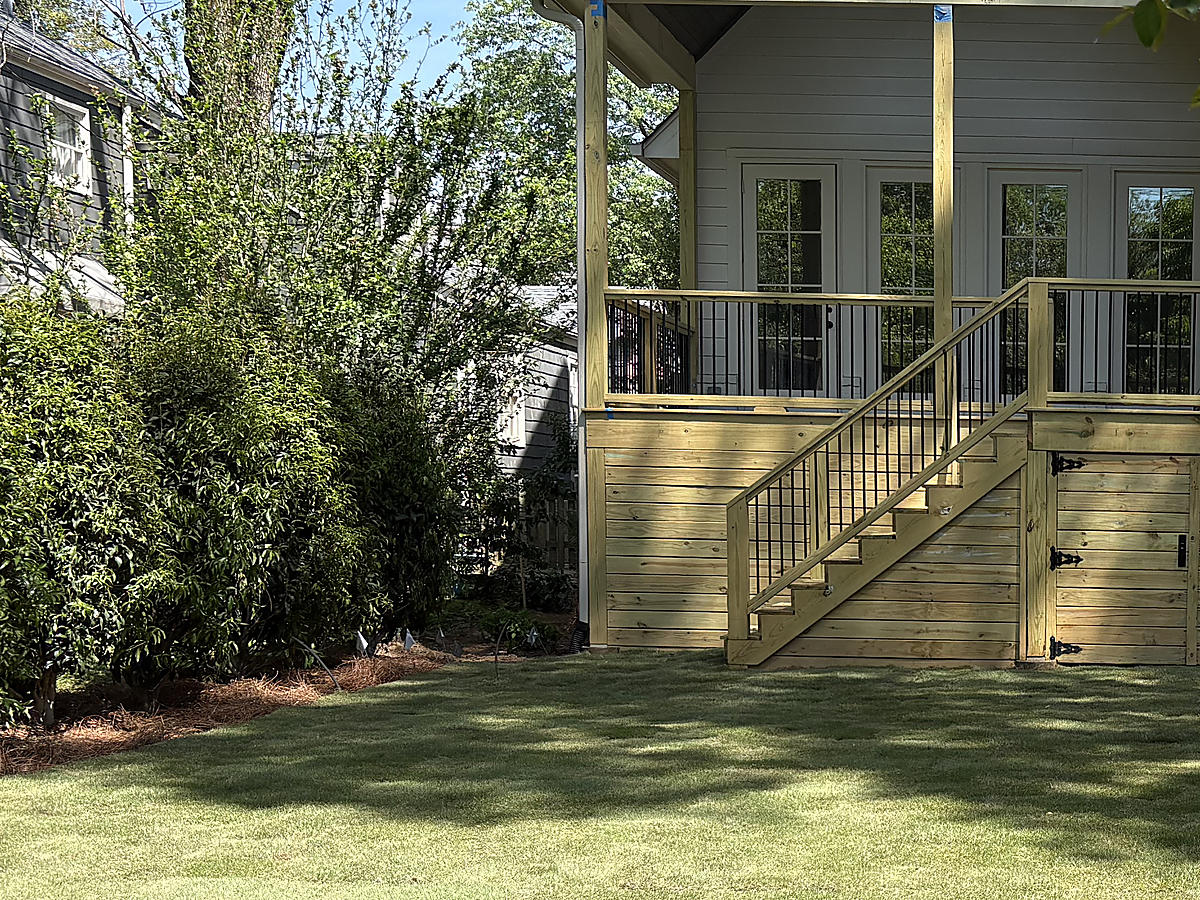
Landscape planting should follow the site, not fight it
Once grade and water movement are resolved, planting becomes much more interesting.
A low area can be planted intentionally because its moisture conditions are understood. A slope can become a layered composition rather than a recurring erosion problem. Trees and shrubs can be positioned according to the soil they will actually grow in instead of the conditions everyone hopes will exist after installation.
This is where technical planning begins to disappear into design.
The homeowner should not look across a finished property and think about swales, drain lines or finish elevations. Those decisions should reveal themselves indirectly: a lawn that remains usable after rain, beds that stay where they were designed, paving that sheds water gracefully, and plants that mature rather than struggle. Landscape design is like film editing, if you are noticing it, instead of experiencing it, it wasn’t done well.
The most refined landscapes often feel effortless because the difficult decisions were made before anything beautiful went into the ground. For us, that's the point of treating this work as design-build rather than decoration. A property should be understood from the ground up, and then designed to last there. Outdoor living space is an investment, in one’s home, life, as well as financially and the company you choose to work with should understand that.